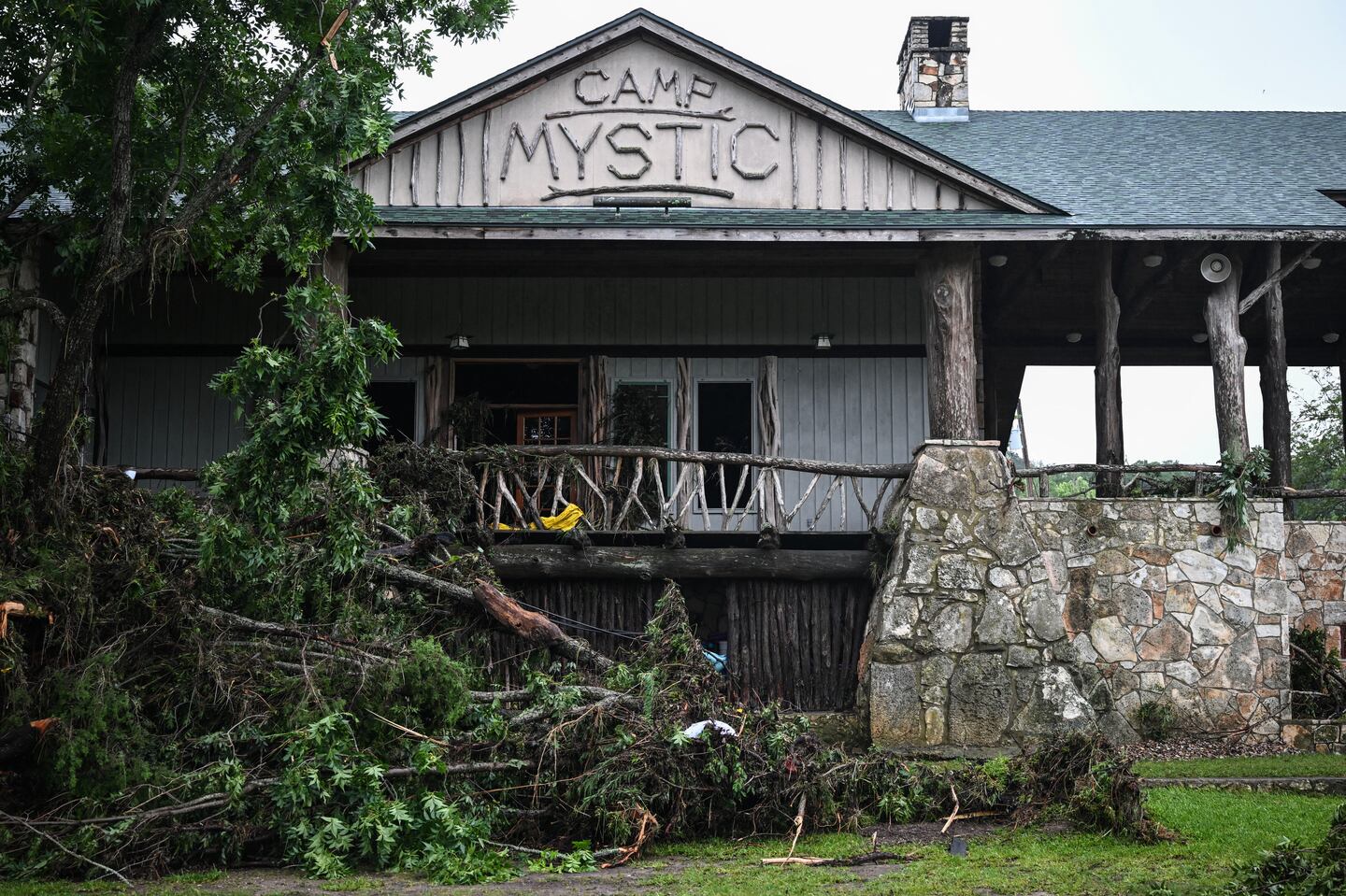
Water moves fast in the Hill Country. One minute you're smelling cedar and sun-baked limestone, and the next, the Guadalupe River is a churning wall of brown debris. It's terrifying. If you’ve ever seen a camp flooded in Texas, you know the sound isn’t just water—it’s the grinding of boulders and the snapping of cypress limbs that have stood for a century.
Texas weather doesn't do "moderate." We get these "training" storms where cells line up like railcars, dumping ten inches of rain on ground that’s already as hard as concrete. The water has nowhere to go but down the draws and into the canyons where our most beloved summer camps sit.
The Reality of the Guadalupe and Frio River Basins
Most people think of flooding as a slow rise. Like a bathtub overflowing. In the Texas Hill Country, it's a flash. The 1987 Guadalupe River flood remains the grim benchmark for every camp director in the state. During that event, a bus from a church camp was swept away. It changed everything about how Texas camps operate today.
Modern camp directors don't just watch the clouds; they are tethered to NOAA weather radios and USGS flow gauges. When the Frio River or the Guadalupe starts to "rise on the gauge" upstream at places like Hunt or Concan, the clock starts ticking. You've got maybe two hours—sometimes thirty minutes—to move hundreds of kids to high ground.
It’s a logistical nightmare. Imagine waking up 300 exhausted ten-year-olds at 2:00 AM.
The geography is the enemy here. Places like Camp Mystic, Waldemar, or Mo-Ranch are beautiful because they are on the water, but that beauty comes with a literal price. The "Balcones Escarpment" acts like a ramp for moist Gulf air. When that air hits the hills, it dumps. Hard. Because the soil is thin over Edwards Limestone, the runoff coefficient is incredibly high. Basically, 90% of the rain becomes instant river.
Why a Camp Flooded in Texas is Different Now
Back in the day, you just hoped for the best. Now, the "turn around, don't drown" mantra is baked into camp accreditation. The American Camp Association (ACA) has specific standards for emergency egress, but Texas camps usually go way beyond those.
They have to.
Take a look at the 2015 Memorial Day floods. The Blanco River rose 20 feet in an hour. It wiped out bridges and century-old trees. For camps in the path, the "flood plain" became a suggestion rather than a rule. We saw cabins that had been high and dry for fifty years suddenly submerged to the rooflines.
The Cleanup Nobody Talks About
Once the water recedes, the "news" part is over, but the disaster is just starting for the camp owners. It’s the silt. River silt in Texas is like liquid sandpaper that turns into a brick when it dries.
- Muck out: You have to shovel inches of stinking mud out of dining halls before it hardens.
- The Smell: It's a mix of wet dog, decaying vegetation, and river minerals. It lingers for months.
- Infrastructure: It’s not just the buildings. It’s the septic systems. When a camp is flooded, the leach fields get saturated and useless. You can't host kids if they can't flush a toilet.
Most of these camps are seasonal businesses. If you lose your June sessions to a flood, you might lose 40% of your annual revenue. Insurance? It’s a nightmare. Standard commercial policies often have massive deductibles for "named storms" or specific flood exclusions unless you're carrying specialized NFIP (National Flood Insurance Program) policies, which are pricey for sprawling riverside acreage.
Misconceptions About "Safe" Ground
I’ve talked to folks who think staying away from the "main" river keeps you safe.
Wrong.
The "dry creeks" are often more dangerous. In 2018, the Llano River saw historic flooding that caught many off guard because it hadn't rained that much at the camp site. It rained forty miles upstream. That's the Texas trap. You can have a beautiful, sunny day at your campfire, while a wall of water is currently barreling toward you from two counties away.
This is why "flood spotters" and automated upstream sensors are the most important technology a camp owns. If the gauge at Junction shows a spike, every camp downstream toward Kerrville is already in "Go" mode.
What to Look for if You’re a Parent
If you're sending your kid to a riverside camp, don't ask about the cabins. Ask about the "High Ground Protocol."
- Where is the evacuation point? It should be a permanent structure above the 500-year flood line.
- What’s the communication plan? If the power goes out (which it will), do they have satellite comms or hand-crank radios?
- Staff Training: Is the staff trained in swift-water rescue? Most aren't, and that’s okay—their job is to avoid the water, not swim in it. But they should know the signals.
The Resilience of the Hill Country
There is something honestly incredible about the community response when a camp gets hit. You'll see rival camps—places that compete for the same campers every year—sending their maintenance crews and tractors to help the "enemy" dig out.
I remember seeing photos of the aftermath at various camps where the "T-dock" (a staple of Texas swimming holes) was found three miles downstream, wrapped around a cypress tree. Volunteers spent weeks winching those docks back. It’s a labor of love because these places represent childhood for generations of Texans.
But let’s be real: climate patterns are shifting. We’re seeing more "extreme precipitation events." This means the historical data we used to rely on for "safe" building heights is becoming obsolete. What was a 100-year flood in 1950 is happening every fifteen years now.
Actionable Steps for Dealing With Texas Flash Floods
Whether you are a camp operator, a counselor, or a parent, the strategy for a camp flooded in Texas is proactive, never reactive. Once the water is at the door, you've already lost the battle.
- Monitor USGS Real-Time Data: Don't rely on local TV news. Use the USGS "WaterWatch" maps. They show the "cfs" (cubic feet per second) flow. If you see a vertical line on that graph, move.
- Hard-Surface Evacuation: Ensure your evacuation route isn't a dirt road that turns into a bog. If the only way out is a low-water crossing, you need to be out long before the rain starts.
- Inventory and Documentation: For owners, use a drone to film the property every May. If you have to file a claim, you need "before" footage of the docks, the retaining walls, and the equipment.
- The 24-Hour Rule: If the forecast calls for 4+ inches in the watershed, cancel the river activities. It’s better to have grumpy kids in the gym than a rescue situation on the water.
- Septic and Well Security: Cap your wells and shut off the main power to the pump house if a flood is imminent. Replacing a submerged pump motor is a $5,000 mistake you can easily avoid.
Texas rivers are the soul of our summer, but they demand a level of respect that newcomers often underestimate. Nature doesn't care about your summer schedule or your deposit. It only cares about the path of least resistance to the Gulf of Mexico.