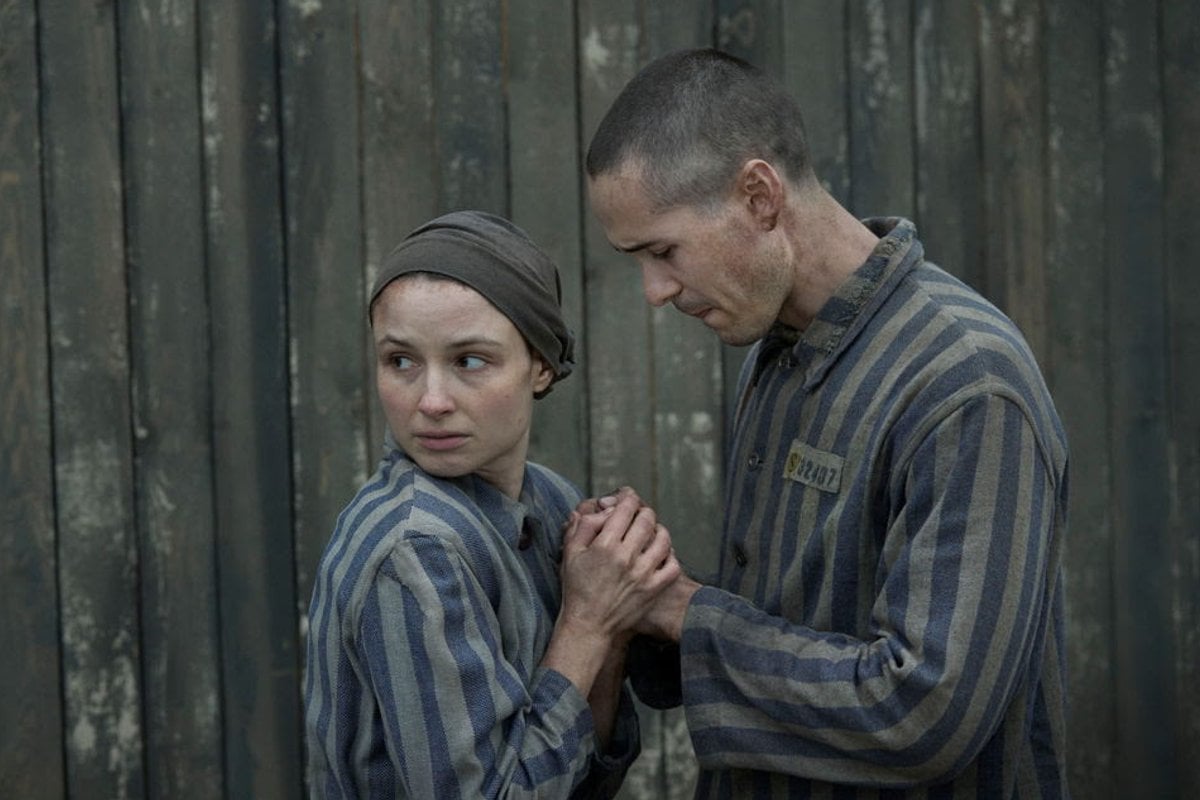
Look, if you’ve been searching for The Tattooist of Auschwitz movie, you’ve probably noticed something a bit confusing. Technically, there isn't a standalone two-hour feature film playing in theaters. Instead, what we got is a massive, high-budget six-part event series on Peacock (and Sky Atlantic) that honestly feels more like a six-hour movie than a standard TV show. It dropped in May 2024, and it’s been gut-wrenching audiences ever since.
People are obsessed with this story. I get why. It’s a love story set in the middle of a literal hellscape. But because it’s based on a "fictionalized" book that claims to be true, things get messy. Really messy.
Why the Tattooist of Auschwitz Movie is actually a TV series
You might be wondering why this didn't just become a movie. Heather Morris, the author, actually wrote the story as a screenplay first. She spent years trying to get it made into a film before she eventually gave up and turned it into the 2018 mega-bestseller.
By the time Hollywood came knocking again, the "limited series" format was the big thing. This was a blessing. You can't squeeze the trauma of 1942 Auschwitz into 90 minutes without losing the humanity. The series stars Jonah Hauer-King (the prince from the live-action Little Mermaid) as young Lali and the legendary Harvey Keitel as the older version of him.
Seeing Keitel as an 80-year-old Lali Sokolov in a messy Melbourne apartment, haunted by ghosts, is what makes this adaptation different from the book. It adds a layer of "memory" that the novel lacked.
The Cast that carries the weight
- Jonah Hauer-King: He plays the young, resourceful Lali who becomes the Tätowierer.
- Anna Próchniak: She’s Gita, the girl whose arm he tattoos, and the reason he chooses to survive.
- Melanie Lynskey: She plays the author, Heather Morris, which is a meta-twist the show uses to frame the story.
- Jonas Nay: He plays Stefan Baretzki, the SS officer who is basically a ticking time bomb of unpredictable cruelty.
What most people get wrong about the "True Story"
This is where the drama gets real. The Tattooist of Auschwitz movie (or series, whatever we're calling it today) is inspired by Lali Sokolov’s life, but historians have had a field day tearing the details apart.
Back in 2018, the Auschwitz Memorial Research Center basically told people to be careful with the book. They pointed out that the prisoner numbers were wrong, the geography of the camp was off, and some of the "romantic" moments were historically impossible. For example, there's a scene about a bus being used as a gas chamber—historians say that didn't happen at Auschwitz in the way described.
Does that make the story a lie? No. But it’s a memory. Lali was in his 80s when he told Heather Morris his story. Think about your own memories from twenty years ago. You get dates wrong. You remember things more dramatically than they were. Now imagine trying to remember details while you were starving and surrounded by death.
The series actually tries to fix this. By showing Melanie Lynskey’s character interviewing the older Lali, the show acknowledges that memory is "leaky." It shows him struggling to remember, getting confused, and being haunted by the people he couldn't save. It’s way more honest than the book was.
The grueling reality of the production
They didn't just film this on a green screen in a cozy studio. The production built a massive recreation of Auschwitz II-Birkenau in Slovakia. It was freezing. The actors were actually miserable, which, in a dark way, helps the performances.
Director Tali Shalom-Ezer didn't want this to feel like a "glossy" Hollywood version of the Holocaust. They used over 5,000 extras. They even brought in the Roma community from Zlaté Klasy to represent the prisoners in the "Gypsy camp" sections of the story.
Hans Zimmer did the score. Yeah, that Hans Zimmer. He teamed up with Kara Talve to create music that doesn't tell you how to feel—it just sits in the pit of your stomach like lead.
Why we are still talking about Lali and Gita
Essentially, people want to believe that love can survive anything. Lali used his "privileged" position as the tattooist to steal food, trade jewels, and keep Gita alive. Some people called him a collaborator. Others called him a hero.
The reality is he was a guy trying not to die.
The Tattooist of Auschwitz movie adaptation handles this gray area pretty well. It doesn't make Lali a perfect saint. It shows the guilt he carried for decades. He kept this secret for nearly 50 years because he was terrified people would think he was a Nazi sympathizer just because he had a slightly better job than the guys digging trenches.
How to watch it right now
If you’re looking to stream this, here is the current breakdown:
- In the US: It’s a Peacock Original. All six episodes are there.
- In the UK/Ireland/Germany: It’s on Sky Atlantic and the NOW streaming service.
- In Australia: You’ll find it on Stan.
Don't expect a fun weekend binge. It’s heavy. You'll probably need a break between episodes because the depictions of the SS officers' "casual" violence are genuinely hard to stomach.
Moving forward with the history
If you’ve watched the show and want to know what’s actually real, the best next step is to look at the USC Shoah Foundation archives. Lali Sokolov gave a real-life testimony there long before the book existed.
You can also read the report from the Auschwitz-Birkenau Memorial and Museum titled "Memories of Auschwitz" which specifically fact-checks the claims made in the story. It’s eye-opening to see where the "Hollywood" version ends and the brutal, boring, administrative reality of the camps begins.
If you're looking for more stories from this perspective, Heather Morris also wrote Cilka’s Journey, which follows another character from the first book into the Soviet gulags. It’s just as intense, though it faces similar "historical accuracy" debates.
Ultimately, the Tattooist of Auschwitz movie series serves as a gateway. It’s not a history textbook. It’s a portrait of a man’s trauma and the one thing—Gita—that kept him from walking into the electric fence. Whether every date and number is perfect matters less than the fact that it’s making people remember what happened in those camps.