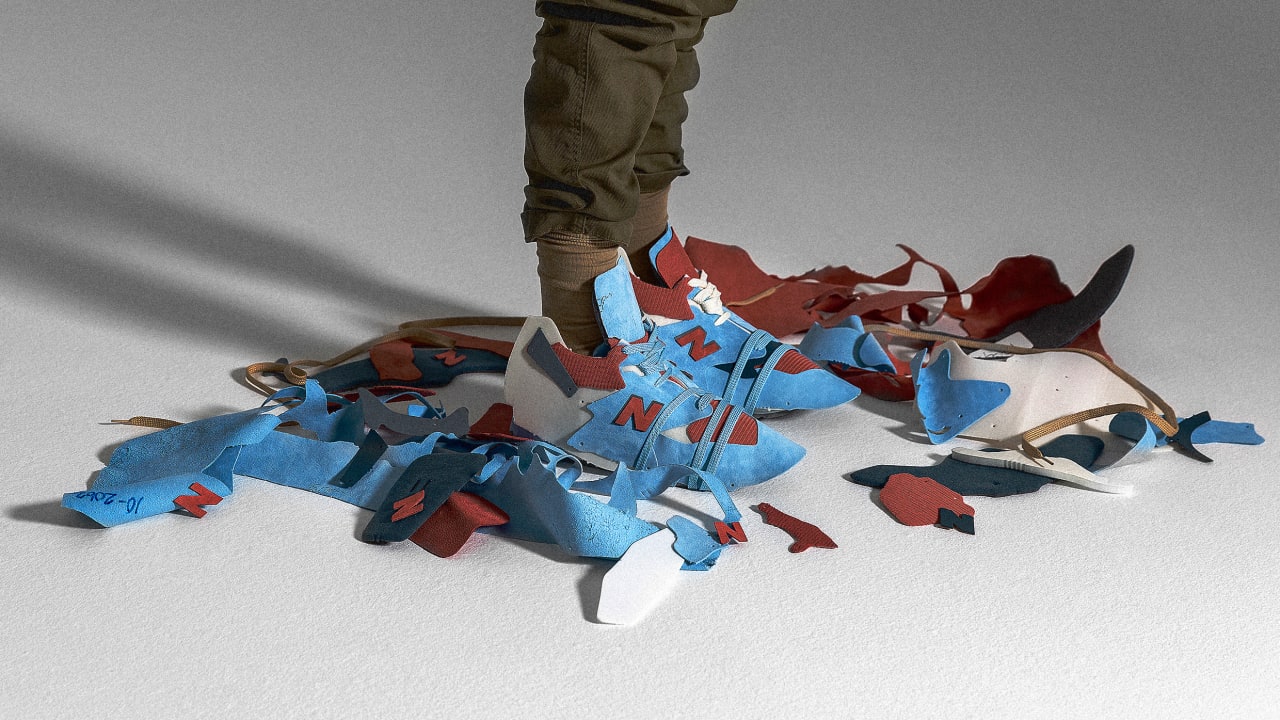
It’s the shoe your dad wore to mow the lawn in 2004. You know the one. It’s chunky, it’s grey, and let’s be honest—it’s objectively sorta hideous. Yet, somehow, ugly New Balance shoes are currently the most coveted items in the fashion world. If you walked through Lower Manhattan or East London right now, you’d see $500 Aimé Leon Dore collaborations on the feet of people who weren't even born when the 990v1 first dropped. It’s a weird paradox. We've collectively decided that "aesthetic" is out and "orthopedic chic" is in.
Fashion is funny that way.
The rise of the "normcore" movement about a decade ago started this landslide. Suddenly, looking like you didn't try at all became the ultimate flex. New Balance, a brand that historically prioritized gait stability over runway appeal, found itself at the center of a storm it didn't even try to create. They didn't change the shoes to be cool. The world just changed its definition of cool to match what New Balance was already doing.
The Science of the Chunky Sole
When we talk about ugly New Balance shoes, we’re usually talking about the 990 series or the 2002R. These aren't sleek. They don't look like they’re from the future. They look like medical equipment. The 990, specifically, was the first running shoe to hit a $100 price point back in 1982. At the time, that was an insane amount of money for a sneaker.
People paid it because of the tech. The ENCAP midsole technology isn't just a marketing buzzword; it’s a core of soft cushioning of EVA (ethylene-vinyl acetate) in the midsole with a tough polyurethane rim for more support and durability. It’s why your feet don't hurt after walking ten miles in them. But that same tech requires a lot of physical space. You end up with a wide, heavy base. It’s bulky. It’s "ugly" by traditional sleek athletic standards.
But here’s the thing: that bulk provides a silhouette that balances out modern oversized clothing. If you’re wearing wide-leg trousers or a heavy overcoat, a slim, minimalist shoe makes your feet look like tiny toothpicks. The chunky New Balance anchors the outfit. It provides a visual weight that just works.
From Ohio Dads to Steve Jobs and Beyond
The history of these shoes is rooted in a very specific type of utilitarianism. Steve Jobs was famous for his New Balance 992s. He wasn't trying to be a style icon; he just wanted a shoe that worked and didn't require him to think about his outfit. That "anti-fashion" stance is exactly what the fashion industry eventually cannibalized.
Designers like Teddy Santis (founder of Aimé Leon Dore and now Creative Director for New Balance Made in USA) realized that there is a deep, nostalgic comfort in these designs. They remind us of our parents, of suburban malls, and of a time before everything was hyper-curated for Instagram. When Santis puts a cream-colored sole on a forest green 990v3, he’s leaning into that "dated" look. It’s intentional. It’s meant to look like it’s been sitting in a closet since 1996.
Why the 9060 is the Final Boss of Ugly Sneakers
If the 990 is the gateway drug, the 9060 is the hard stuff. It looks like a spaceship and a toasted marshmallow had a baby. The midsole is exaggerated to a point that feels almost satirical. It’s got these wavy lines and pods that stick out at odd angles.
Honestly? It’s polarizing.
Half the people who see them think they’re a disaster. The other half think they’re a masterpiece of maximalist design. This is the "ugly-cool" spectrum in its purest form. Brands like Balenciaga paved the way with the Triple S, but New Balance made the look accessible and, crucially, actually comfortable to wear for more than twenty minutes.
The Color Palette of "Greyscale"
One major reason ugly New Balance shoes dominate is their commitment to the color grey. Most sneaker brands go for neon, high-contrast, "look at me" colors. New Balance built an empire on fifty shades of slate, charcoal, and pebble.
Grey is the ultimate neutral. It hides dirt better than white but doesn't feel as heavy as black. It looks expensive in a quiet, "if you know, you know" kind of way. This is part of the "Quiet Luxury" trend that took over in 2023 and 2024. You’re wearing a shoe that costs $200+, but it doesn't scream. It just whispers that you value quality over trends. Or that you really like the way a 993 feels on a gravel path.
Misconceptions About the "Ugly" Label
Is it actually ugly if everyone wants it? That’s the philosophical question here.
Some people think New Balance is just a trend that will die out when the "dad shoe" craze ends. I disagree. New Balance has a "Made in USA" and "Made in UK" line that uses premium pigskin suede and high-end mesh. These aren't disposable fast-fashion items. They are built to be resoled or at least worn into the ground over several years.
There's also a misconception that these shoes are only for older people or "uncool" demographics. Go to any major fashion week—Paris, Milan, Tokyo. You will see editors in head-to-toe Prada wearing a pair of beat-up New Balance 991s. It’s the ultimate equalizer. It signals that you are too busy being productive or creative to care about wearing uncomfortable "fashion" shoes.
How to Style Them Without Looking Like You’re Going to a PTA Meeting
If you’re worried about leaning too far into the "dad" territory, there are a few ways to pull this off.
- The Proportions Rule: Don't wear them with skinny jeans. It creates a "clown shoe" effect. Opt for straight-leg or relaxed-fit denim that hits right at the top of the shoe.
- Contrast is Key: Pair your chunky, "ugly" sneakers with something slightly more formal—like a wool coat or a structured blazer. The contrast between the sporty, bulky shoe and the sharp tailoring creates a modern look.
- Sock Choice Matters: A slightly scrunched white crew sock is the classic pairing. It leans into the athletic heritage. Avoid "no-show" socks with these; it makes the chunky silhouette look disconnected from your leg.
- Embrace the Monochrome: If the 9060 or 990v6 feels too busy, stick to an all-grey or all-navy colorway. It tames the "ugliness" and makes the shoe feel more like a cohesive part of the outfit rather than a loud statement piece.
Finding the Right Pair
Not all New Balances are created equal. The 574 is a classic, but it’s a bit basic. The 327 has that weird flared sole that was huge a few years ago but is starting to feel a bit dated. If you want the true "ugly-cool" experience, look at the 990v3, v4, or v6. These are the heavy hitters.
Check the labels, too. The "Made in" series uses significantly better materials than the budget versions you find at big-box sporting goods stores. You’ll pay a premium—usually between $190 and $220—but the durability and the "aged" look of the suede are worth it if you’re trying to capture this specific aesthetic.
Final Takeaways for Your Next Purchase
Stop looking for a "pretty" shoe. The beauty of ugly New Balance shoes is in their utility and their defiance of traditional beauty standards. They are unapologetically functional.
Next time you're at a sneaker shop, try on the one that looks the most like something a geography teacher would wear. Walk around. Feel the arch support. Notice how the chunky sole makes your calves look. You might find that "ugly" is actually exactly what your wardrobe was missing.
To start your collection, look for the 990v3 in "Marblehead" or the 2002R in "Protection Pack" grey. These models hold their value well and serve as the perfect entry point into the world of elevated dad-core. Avoid the ultra-bright neon colors unless you're actually running a marathon at night; the magic of these shoes is best served in muted, tonal shades.